Monday, April 21, 2025

Exclusive Interview – The Greek Theatre


Exclusive interview with Fredrik Persson of, "The Greek Theatre".  

Interview By: Stewart F. Brennan

Recently, I caught up to Fredrik Persson of, “The Greek Theatre”, to ask him some personal and pointed questions on his creative passion and music journey.

But before we get to the interview, let’s first shed a little light on the Greek Theatre and their music.

The Greek Theatre are a soft psych Swedish duo consisting of Sven Fröberg and Fredrik Persson who’ve just released their 4th full album called, A Deeper Scar on Dec 21st, 2024.

I first heard about the Greek Theatre in 2017 after cruising new releases on the Bandcamp music website. I was looking for music to absorb and grow with and to share with friends and music fans on my World United Music blog, when I happened upon the Greek Theatre. I was intrigued by the name, and thought, “What is this?” but when I had a listen to the sample song, “Still Lost at Sea”, I was floored.

Video: Still Lost at Sea 


Have you ever had one of those moments when you’ve just heard a song for the first time and it completely absorbed you, captured you with its infectious sound? That’s what “Still lost at Sea” did to me. I was instantly struck by the songs soothing laidback sound and peaceful lyrics, that I swear, it made me feel like I had just travelled back in time, hearing for the first time, a hit song I missed from the mid 1960’s. Of course, when I played the song a second time, it became an addiction leaving me with a thirst to play it over and over. That hadn’t happened to me for a very long time and so I decided to listen to the full album, “Broken Circle” beginning with the first track, “Fat Apple (at about noon)” and became absorbed into what quickly became an absolute favorite album.

The subtle psych, progressive, sound of the Greek Theatre with its poetic opening line, “Cast away all of your fears” hooked me. I mean, “WOW!” What a way to open an album, especially in these crazy times we live. It brought me to a safe zone.

Fat Apple, built and progressed into a brilliant time warp of 60’s / 70’s rock that peeked into a satisfying infusion of atmosphere and nostalgia, and then drifted away like a rolling wave, back out to the conscious sea; teasing me with its connection to happier times, while leaving me longing to feel that rush of time again. Simply masterful, creative genius. The stuff of great memorable music that you never forget or get tired of.

I bought the album immediately and was inspired to restart the music program on my YouTube channel called, “The Minstral Show”; a music program that allowed me to share brilliant music by independent and unsigned artists with subscribers. I felt then, as I have since the beginning of my project, that the world needed to know about the great music out there in cyber space that they were missing, and the Greek Theatre were definitely one of those bands.

The Minstral Show 34b - The Greek Theatre, Dave Kerzner, Agusa


On closer look, I found that “Broken Circle” was their second album and so I spent some real quality time listening to their first album as well, called, “Lost out at Sea”, which was released four years earlier on July 1st, 2013.

As a music fan that loves to discover great new music, I also enjoy looking into a band’s beginnings to see where their creative magic sprung from, and for the Greek Theatre, there was no exception.

I have found that first albums lay the ground work to a band’s sound, their atmospheres and expressions of what’s to come. That is exactly what I found with the Greek Theatre’s first album, “Lost out at Sea”. A soft folkish yet subtle energetic flowing music with country psych tones that were mature and begging for a listen. I could hear the quality right away and sat back to absorb their sounds. It was plain to see how their second album evolved and made it into the spotlight on the indie waves. Music around the world was coming alive in a renaissance of conscious thought, and the Greek Theatre was right there in the middle of it.

However, time and a world filled with loud twists and dark turns has a way of capturing our attentions while chasing us away from music and the relaxing moments that heal us.

As 2020 began and embroiled the world with an evil spirited plandemic, the renaissance of music and entertainment came to an abrupt end with a global lockdown.

But even as the tyrannical fear factors were being pushed by global establishments, bands like the Greek Theatre were still creating great music, although the attention for their music, as was the case across the spectrum of music, fell away to people’s concerns of tyrannical governance.

The Greek Theatre launched their third album, “When Season’s Change” in January 26th, 2020, just as global attentions turned away from music to focus on a coordinated fear balloon that was inflating across the world.

The title to the Greek theatres third album was almost prophetic to the times while also evolving the Duo’s sound which poked into the harder electric guitar psych era with the third track on the album, “The Post Factual Jam”. A reminder of the psychedelic era of the late sixties. Their soft folk, country psych sound also remained and progressed, reminding of the subtle sounds of Crosby, Stills, Nash and Young on the fourth track of the album called, “Bible Black Mare” an eight minute and twenty-three second masterpiece that holds its own Déjà vu.

When Season’s Change” is a brilliantly evolved, and truly rich album filled with deeply immersive music with elements of mind-expanding adventure, peace, healing, and that ever present glorious sound of the sixties. A truly worthy follow up to their second album “Broken Circle”, an album that should have gained the band a larger following if not for the disruption of life by a globally coordinated psychological op.

The Greek Theatre’s fourth album, “A Deeper Scar” which was released on December 21st, 2024, is a great evolution of the band’s professionalism and signature sound.

The album opens with an alternative tune, “Alpha” being played in the background on a radio which then flows into reality as if you’ve just walked into the musician’s mind space. A great intro to an album that evolves the brilliance of the band’s sound, which reminds of how special it really is by the second track called, “All your Saviours”.

All your Saviours” is an absolutely brilliant creation that captures the essence of an era long gone through its soft flowing country psych folk sounds and vocals. I’m reminded of the early 1970’s as the song seemingly captures and blends the best sounds of that era into a unique inspiration that is their very own sound. “All your Saviours” is absolute gold, and has become my favorite on an album filled with great music.

All Your Saviours


Each song on the album holds music images and impressions of the past as if consciousness stepped up and tapped you on the shoulder to say, “look what you missed”; From the iconic flute solos and leads on the third track, “A Man Outside My Door” to the fourth track, “Tender Queen” which is filled with a rich blend of conscious sound that encompasses the progressive rock and psychedelic era’s.

The Greek Theatre’s music not only belongs with the greats of those era’s but stand tall in today’s world as uniquely significant and necessary. They are like a missing link to the 60’s and 70’s eras of music that I’m starting to believe that both Sven Fröberg and Fredrik Persson are time travelers; for music, indeed, is a time machine to the past and “The Greek Theatre” are the masters of it.

So, here we are now in April, 2025 a few months after the Greek Theatre’s fourth album release, “A Deeper Scar” which is another brilliant album from this iconic Swedish music duo, so it’s a real pleasure for me to speak with one of the members of The Greek Theatre, Fredrik Persson, on his and Sven Fröberg’s music journey.

[WUM] First, let me tell you how much I’ve really enjoyed your music.

“WOW!” Triple WOW! And freaking amazing creative work you guys have blessed the world with. I’m absolutely blown away by your music. I love it and see it as a missing link to that special period of the 1960’s and 70’s that captured the world with a love fest and an evolution of mind and soul.

I’m truly thankful to have experienced your music and so, like all music fans, I’m curious to find out more about “The Greek Theatre”. So, let’s begin.

[WUM] What first got you into music, and what inspired you to start playing/making music?

[FP] My sister´s boyfriend (and later husband) was a huge Beatles fan and went into depression when John Lennon was murdered. At the time, I was seven years old, and of course, I wondered why he was so sad. My parents had a Beatles greatest hits record and so I put it on. I remember getting instantly hooked, not only by the catchier stuff like, “I Wanna Hold Your Hand”, but also songs like “Lucy in the Sky with Diamonds”.

My father listened a lot to swing, Hank Williams, Fats Domino etc. He was born in 1933 and he told me how he tuned in to Radio Luxemburg in the 1940s and 1950s; a radio channel that played a lot of American jazz and country long before the Swedish public radio channels, which were the only ones available until the 1980s.

As a side note, my sister´s boyfriend ran a so-called pirate (illegal) radio channel in the 1970s and 1980s. I remember he was fined many times! He had a decent guitar which I sometimes played, but it was an older cousin who actually taught me the essentials of guitar playing in the mid 1980s. Even at that young age I was mostly drawn to the music from the 1960s and 1970s.

One of the few 80s bands I liked was U2, which seemed so out of touch with most other bands, both musically and aesthetically. However, they never influenced my own song writing. My first songs were attempts in the Beatles tradition and later, around 1990, I got more interested in psychedelic stuff, as well as the more folkier side of Led Zeppelin.

After moving to Lund, a southern university town, I discovered power pop bands like The Posies, Big Star, Teenage Fanclub, etc. This led to my first proper band, The Halos, which actually did some recordings with Ken Stringfellow of The Posies. We were pretty close to signing a deal but ambitions within the band varied and now, twenty-five years later, I´m grateful I chose another life. Many friends that went all-in into the professional music biz are pretty fucked up and bitter.

The possibilities of sustaining a decent living off music started to wane in the early 2000s, even for the really great bands.

[WUM] How did your band form? How did you pick your band name or how did you settle on the bands name, “The Greek Theatre”?

[FP] My former girlfriend and partner, is a childhood friend of Sven´s wife. Sven is a true Stockholm dude and had already built up a remarkable record collection when we got to know each other in the early 1990s.

I grew up in a small town where the record stores only stocked mainstream stuff; rescue was mail order and the odd record fair in slightly larger cities.

Sven and I started working together when The Halos split and I was looking for new musical projects. With Sven, I re-discovered my late 60s/early 70s influences and thanks to him, discovered tons of more or less obscure stuff from that era. Regarding the band name, I´m not sure how that was chosen. Sven tossed around a few band names until settling for The Greek Theatre.

[WUM] How would you describe the music you create? And how does Sven Fröberg and Fredrik Persson typically collaborate on songwriting and music creation?

[FP] In my mind, our music is not hard to grasp, we never try to come up with “artsy” och “demanding” songs or albums. For lack of a better term, our music is totally organic and often a result of one´s stream of consciousness, ramblings on guitar or piano etc. However, we are pretty keen on the idea of creating a place, a setting that the music should conjure up.

We rarely write together. We write separately and then we tend to co-produce each other´s songs.

Since we have been working pretty steadily with The Greek Theatre for about twenty years, we trust each other and we seldom need to articulate what we think or what should be different. You learn to recognize the feeling when it all comes together.

The songs are pretty much finished when we present them to each other, mainly in the form of demos we send via e-mail etc.

Sven lives in Stockholm and I live in the woods down south so we only see each other a few times a year. That is one reason why we take so long between albums; the other being this “organic” approach without any deadlines.

We only use proper studios for drums and some bass tracks; the rest is recorded in various locations in Stockholm and in my rudimentary studio above the stable on our small farm. We try out overdubs and different mixes until we get the right vibe, image and sound. We never use any short cuts by emulating our musical heroes, although you can definitely hear our influences.

Our music lives in an idealized world, spanning from Laurel Canyon and northern California, over the ocean to the British Isles and Sweden where, in the 60/70s, a lot of great jazz and folk inspired music was made. Although I maintain that I feel our music is pretty simple, it requires a certain level of focus and time. Hopefully our albums create a cinematic as well as a spiritual experience. It´s never intended to sound druggy or hazy, but still leading to some heightened awareness.

Drugs or alcohol have never been a part of our song writing. Luckily, we can reach the required state without any stimulants! I suppose things were different in the 60s when folks were trying to break away from norms and cultural constraints.

[WUM] Can you share an amusing story about the band?

[FP] We have played only one gig! That was in Stockholm in 2001, I believe, before we were called The Greek Theatre and the band actually was a backing band for some recordings Sven made between 1999 and 2001. The sound check was so horrendous that I had a major panic attack and nearly left the venue! But in the end, it was a great gig. Back then the songs were a lot simpler. It would be almost impossible to play any of the Greek Theatre songs from our records, live.

[WUM] What is the best advice you've ever been given?

[FP] Use your ears and trust your instincts, whenever you are making music!

[WUM] Of the four Greek Theatre albums, which one is the most memorable for you? Do you have a favorite song or album?

[FP] The first one, “Lost Out at Sea”, has a special place in my heart. We realized that we could make a solid record that worked as a whole and we had some fine reviews. I think the last one, “A Deeper Scar”, is the best when it comes to the quality of the songs and the lyrics. Also, we recorded it with some members of Dungen, notably their fantastic drummer Johan Holmegard, which really made a difference in terms of groove and energy.

[WUM] In an earlier interview from your first album, “Lost out to Sea” you mention that there will be four Greek Theatre albums.

Now that you have released your fourth album, has this mind set changed? Take us through your four-album journey and your thoughts for the future of The Greek Theatre. What's next for Sven Fröberg and Fredrik Persson and / or The Greek Theatre?

[FP] Hehe, that whole “we wrote 45 songs in a cabin during one summer, which will be released on only four records” thing, was some kind of attempt to create mystery and lore! We will most certainly go on working together but perhaps in a slightly different form. I for one would like to scale down the arrangements and number of overdubs, going after more directness and simplicity, stuff that we can play live.

It is pretty exhausting producing the type of albums we´ve released. We mainly do this for our own sake and personal joy but the relative lack of interest from media and public doesn´t necessarily motivate you to embark on these big productions over and over again. Also, last November I was diagnosed with terminal brain cancer so there´s no telling how long I will be around. Could be a year or several years. Maybe the prophecy of four Greek Theatre albums will prove to be true.

[WUM] Well, I for one, am a great fan of your music and know many others would also love your music if they took the time to listen. Personally, I find an inner conscious connection to it that has healing properties of its own.

Although, I have to say, I’m taken aback by your devastating cancer news. I’m a big believer in healing and so I join you in conscious thought and positive energy to beat this bastard cancer and pray and hope that you will be around for many, many years to come.

Looking back, if you could change anything about the music industry, what would it be?

[FP] Of course, the streaming services should really pay more to the artists. In many ways modern technology is a blessing; never before has it been easier to create music or discover new music. For instance, the big arrangements and complex soundscapes we create with The Greek Theatre would never have been possible before Pro Tools (and other so-called DAWs) and powerful but yet affordable computers. Back in the day, you needed big studios, a lot of people (engineers), a lot of time and thus enormous budgets in order to create massive records. The music industry is totally disintegrated and yet a few enormous acts (du jour) steal most of the bandwidth and resources. Also, the people in charge are insanely careful to keep feeding the masses the same shit, year after year. Just one look at the Top 100 from, say 1970, speaks of times when there was real diversity in popular music. However, good music always finds its listeners, given time.

[WUM] I have to agree with you on everything you’ve said Fredrik. More money for the artists who create the music and the world needs a good variety of music expression which is precisely why I created World United Music in the first place; to promote great music to the world, in the hopes that I could help bring music variety back to the world…because, as you say, good music always finds its listeners.

Fredrik Persson, it’s been an honor and a privilege connecting with you today. I wish you the greatest health and healing in your battle while I also want to thank you for sharing your creative genius that has brought healing and positive energy to the world through your music. I wish and pray for you, long life and continued inspiration. Thank you for spending time with me today.


Links for The Greek Theatre

Bandcamp

Facebook


Monday, February 24, 2025

A Journey Through Power, Secrecy, And Intuition - Reader House Interview with SF Brennan


Hi everyone! Just dropping a little news.

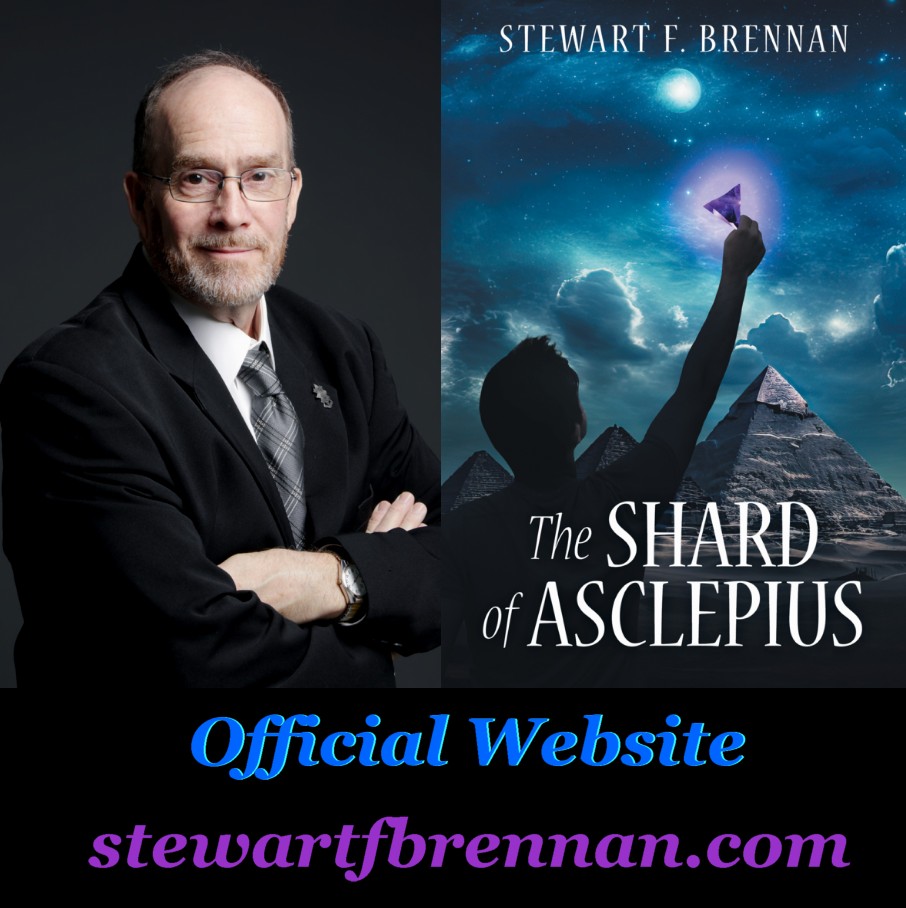
Earlier this month, I was contacted by Readers House Magazine from London England for an in-depth author interview regarding my book, “The Shard of Asclepius”. The interview was a wonderful surprise for me, was conducted on a highly professional level and was chosen for their 49th online and physical edition for their prestigious literary magazine.

Readers House Magazine is considered to be London’s gateway to discovering today’s voices of literary excellence and celebrated authors. My interview is in very good company within the 49th edition of the magazine which includes a stellar line up of award winning, bestselling and indie authors including the Sunday Times bestselling author, Scott Mariani.

If you are looking for great stories, books and author’s, Readers House Magazine is where you can find them. So, I highly recommend visiting their online magazine editions to find out the best books and authors of the day.

To view the entire magazine issue # 49 and the exceptional authors within, click on the following link.

Reader’s House Magazine – Issue #49

My interview is on page 68 and 69 but I have also included the interview below for your convenience.

Here is that interview:

Readers House Magazine Interview – Stewart F. Brennan

Editor’s Desk – London

A Journey Through Power, Secrecy, And Intuition


Stewart F. Brennan discusses his debut novel, The Shard of Asclepius, blending ancient history, hermetic principles, and modern technology, while exploring themes of power, intuition, and humanity’s connection to nature.

Stewart F. Brennan is a name that resonates with intellectual depth and creative brilliance. A man of many talents, Brennan has seamlessly transitioned from a career as a lean manufacturing specialist and electrical engineer to becoming a celebrated author whose works challenge, inspire, and provoke thought. His journey from analysing corporate systems to exploring the mysteries of ancient history and the complexities of modern geopolitics is nothing short of remarkable. With a mind honed by critical thinking and a heart attuned to the rhythms of poetry and prose, Brennan has gifted readers with a body of work that is as diverse as it is profound.

His earlier series, The Activist Poet, showcased his ability to weave together poetry, political commentary, and prose into a tapestry of thought-provoking literature. Now, with his debut supernatural thriller, The Shard of Asclepius, Brennan has taken his storytelling to new heights. This action-packed novel masterfully blends ancient mysteries with high-tech intrigue, offering readers a gripping narrative that is as intellectually stimulating as it is thrilling. Set against the evocative backdrops of Quebec and New York State, the story delves into themes of hermetic principles, secrecy, and the balance of power, all while exploring the profound connection between humanity and nature.

Brennan’s ability to draw from his own life experiences—whether it’s his deep connection to the natural world, his fascination with ancient civilizations, or his expertise in electrical engineering—imbues his work with authenticity and depth. His creation of the shadowy Collective and the enigmatic Order of Hermes reflects a keen understanding of both historical and contemporary power structures, while his protagonist, David Collins, serves as a relatable figure for anyone who has ever experienced a profound awakening of the mind and soul.

In this exclusive interview, Stewart F. Brennan takes us behind the scenes of The Shard of Asclepius, sharing the inspirations, philosophies, and personal experiences that shaped his extraordinary debut novel. Prepare to be captivated by the insights of an author whose work not only entertains but also challenges us to see the world—and ourselves—in a new light.

“Stewart F. Brennan is a masterful storyteller whose profound insights and thrilling narratives captivate readers and challenge conventional thinking.” ~ Editor, Reader’s House

What inspired you to create the concept of the Collective and their shadowy control over society? Are they based on any real-world influences?

Born in 1960, I’ve seen and experienced, the rise of corporatocracy which is now prevalent throughout the western world. The concept of the Collective in the Shard of Asclepius is based on this model of dystopian economics where a powerful group holds the reigns of hundreds of corporations, banks and governments.

Decision making in this model comes from the top and makes its way down the chain of command much like a military organization. Yet, the real power in a corporation like this rest with the largest shareholder(s) whom make the final decisions on the business direction. Those decisions are based on its annual growth target, regardless of how immoral the path to achieving their goal is.

Examples can be seen through the weapons companies that prosper on war or the pharmaceutical industry that prospers on illness. These are some of the largest companies in the world. They are too big to fail while their growth requirements are exponential. There is no off switch and so they need to expand their footprint constantly or experience decline.

To thrive, both examples also require ignorance of the population. In this context, the multi-national commands political influence, has intelligence services or insiders working for them and have their people within the media and justice system. It is very much like a parasite or a cancer.

So, in a nutshell, that is where the concept of the Collective comes from.

“The concept of the Collective in The Shard of Asclepius is based on the model of dystopian economics.” ~ Stewart F. Brennan

How did you develop the character of David Collins? Is he inspired by someone you know or perhaps aspects of yourself?

In many ways, David Collins is me. He’s made from some of the experiences I have gone through in life but he also stands as a composite figure for those that have experienced a mind and soul awakening. Thus, his character can be identified by many people.

The Order of Hermes plays a significant role in the story. What research or mythology influenced your portrayal of this secret organization?

In short, the influence for the Order of Hermes comes out of the Ptolemaic history in Egypt and its role in building the great library of the old world in Alexandria.

The Order of Hermes follows hermeticism which centers around the works of Hermes Trismegistus, the Greek version of the Egyptian deity Thoth who was responsible for the regeneration of humanity after a major cataclysm on earth destroyed the ancient world.

So, in reality, the influence for the Order of Hermes is born out of the connection between Ptolemaic Egypt and the mythical keepers of the ancient knowledge of Egypt.

The story takes place across Quebec and New York State. Why did you choose these locations, and how do they contribute to the narrative?

I’ve lived in and around southern Quebec for most of my life and spent a lot of time touring Ontario and New York state. These places hold special memories and deep-rooted natural connections for me. The Shard of Asclepius not only centers on earth’s ancient past, but also on old ways of thought. Nature becomes the key in rediscovering old ways of thought for David.

“David Collins is me… a composite figure for those that have experienced a mind and soul awakening.” ~ Stewart F. Brennan

There is a magic in nature that connects us to a greater consciousness. Something that I personally experienced many times over the years in the forests and waterways of Quebec, Ontario and British Columbia. Having a connection with nature, I believe, is an integral part of trying to understand who we are and our role here on earth.

It is also part of the hermetic experience, of inner knowledge and intuition. So, I included some of the places I was familiar with for reasons of natural connection and the concealed theme, which is, healing.

What inspired you to blend ancient mysteries with high-tech intrigue in “The Shard of Asclepius,” and how did your background in electrical engineering and history influence the story?

When studying ancient places across the world, such as in Egypt, it became clear to me that the builders of the pyramids and the many temples across Egypt could not have been made without possessing highly advanced technology. There is suppression of this fact that is just as mysterious as the megalithic structures and stone artifacts themselves.

By comparison, I have studied electrical engineering and seen the rapid advances in digital electronics over the past two decades that have gone from a very simplistic core of binary numbering systems and programming for toys and computers, to Artificial intelligence and drone warfare.

Electrical advances in communication have also become invasive of our personal privacy and so the contrast between a technocratic prison verses personal freedom becomes a serious question for this day and age

I wrote both old and new worlds into the story to bring attention to these very real scenarios.

The novel explores themes like Hermetic principles, secrecy, and the balance of power. What message or reflection do you hope readers take away from these elements in the book?

The world today is ego and greed driven which is the complete opposite of where we should be going. In a way, the story is a reminder that there is another way to live.

As mentioned, there are elements within the book that speak directly to one’s conscious spirit. Nature provides the greatest example of this because it speaks to the individual at a conscious level, which is something many of us have been disconnected from.

Intuition plays a role in everyone’s lives. There is a knowledge within that is not book knowledge (episteme), but a conscious understanding of things; a gnosis or an intuitive knowledge of spiritual truth. Most people can identify with this but do not practice it. Therefore, the message I hope people take away from the story is to trust in intuition. Don’t be afraid to live your life or be afraid to express your point of view regardless of how stacked the pressures are against you. There are always people who see things the way you do. Those people are your tribe and will appear in your life when you begin to express yourself truthfully. You are not alone and there is a new horizon just waiting for you.


Where can someone buy the book?

The book is available to purchase world wide at all major and minor stores. Here are just a few links but you should be able to find it wherever books are sold:

Barnes & Noble

Indigo

Amazon

Friesen Press

Apple

Waterstones

For more information on the Book and Author Stewart F. Brennan visit his official website.


Monday, September 2, 2024

World United Music and New Horizon’s


Hello everyone, my name is Stewart F. Brennan. I’m the creator of this, the World United Music blog.

Over the past two decades, I’ve juggled my time and energy populating five different blogs containing alternative news, music, economics, political activism and creative passions while also supporting hundreds of artists, activists and alternative news journalists. I did so because those I supported, offered something that mainstream did not.

The goal of my past efforts on those blogs was to show, with proof, that there were other sides to a story, and of course, better music offered by artists not in the mainstream spotlight.

World United Music was and still is a place that showcases the music and artists that I profiled for over an 11-year span. It was a labour of love in reflection to one of my greatest passions, “Music”.

However, I eventually combined my Geo-political and Geo-economic observations with my societal discontent and my poetry into a three-book series, titled, “The Activist Poet - Vol 1, Vol 2 & Vol 3” hoping that they would help awaken a population that was sleep walking into a consolidated economic tyranny and another World War. These books remain my testament to truth against powerful western propaganda and censorship.

The Message

My message has always been, that there is a better way to live on this planet than the way in which we are living right now. The world I believe in, is a world that is inclusive for all and not just for the privileged few…of course, I was censored just like the thousands of concerned online journalists and artists trying to make the world a better place.

So, due to massive online censorship of this blog and important voices, I have taken the next step forward in my quest to make the world a better place and written a science fiction / supernatural thriller called, “The Shard of Asclepius”.

The following quote by Gao Xingjian reflects my belief and why I wrote a book of fiction.

Quote: “It's in literature that true life can be found. It's under the mask of fiction that you can tell the truth.” ~ Gao Xingjian ~

I have hope that many people will see and read this intriguing book, “The Shard of Asclepius”, but it’s virtually impossible to get the book populated on mainstream bookstore shelves, even though it’s available online through Ingram's global network of book sellers. As an independent author, I need your help.

My book is on the Indigo, Amazon and Barnes & Noble websites but in order to get the book seen by the public, I need my supporters to go to those websites, rate the book, buy a copy from them and maybe leave a review of the book. It helps move the book into attention. Books that are not supported by a major publisher or large online community, are not visible to the public and so an independent author such as myself relies on friends and community for support.

I’ve also created a new website which will be dedicated to all the books I publish as an author going forward. Here is the link to my new website.

Official website of Stewart F Brennan

To the people I’ve supported and / or the people who’ve visited and supported my blogs in the past, thank you! I hope you will also follow me on this next step of my journey.

Here is a short video trailer for my book, “The Shard of Asclepius”. Please consider visiting my new website to find out more about the book and then consider sharing the link with your network of friends. Thanks for taking the time to read this blog post and for your support! I look forward to hearing from you. Have a great week!


VIDEO TRAILER


Let's Connect! 


Sunday, May 24, 2020

Prog Rock and Progressive Activism


Progressive Rock Through the Ages


By: Stewart Brennan

Progressive Rock is one of several experimental genres that evolved out of Rock n Roll in mid 1960’s. It was a purely creative genre that carried at its initial core, reflections of morality, philosophies, political views and the social economic conditions of the times.

The genre had a wide range of influence and emerged in the mid 1960's when record labels allocated more creative control to their artists who began pushing the confines of the twelve bar, 2 to 3-minute Pop / Rock n Roll song structures. The influence of folk, jazz, blues and classical music began finding their way into the experimentation as did the new psychedelic wave which also grew out of the evolution of Pop and Rock n Roll.

Additional elements that contributed greatly to the nature of Progressive Rock was the infusion of more poetic lyrics and or new technology that helped artists produce sounds to bridge their creative ideas for both studio album and onstage performance. The recording studio thus became a place of creative artistic freedom and focus which often involved producing music for listening rather than dancing. In essence, Progressive Rock was based on a fusion of styles, approaches, genres, and creative freedom.


 60's Progressive Rock its Roots and Beginning


Music is placed in descending order of Release Date Starting with Jan of the earliest year and ending with Dec of the last year in the decade. The purpose is to give the music a sense of time and atmosphere for the listener. More music will be added as it becomes available.

The mid 1960’s to the mid 1970’s was a very social and political expressive era that contained a very vocal anti-war and anti-immoral establishment voice. Much of this was expressed through progressive music. In fact, freedom of expression in music was a major factor in carrying the anti-war voice which created enormous pressure on the US government to end their war on Vietnam.


 70’s Progressive Rock 1970 to 1974


Music is placed in descending order of Release Date Starting with Jan of the earliest year and ending with Dec of the last year in the decade. The purpose is to give the music a sense of time and atmosphere for the listener. More music will be added as it becomes available.

Progressive Rock saw a high level of popularity and peaked during this period (1965 to 1975), but it soon faded as the war in Vietnam ended but also because the record labels pushed their artists into producing a more popish sound. One might also argue that between touring and label contractual demands placed on the bands, creative studio time became somewhat limited. Even still, some bands were producing two albums a year and touring which contributed to some of them experiencing burnout requiring an extended break. (The Moody Blues, E.L.P. as examples) The tight, high-pressure conditions certainly played a role in the genre’s fading.

With the Vietnam war at an end, the 1960’s anti war culture had also come to its conclusion leaving only the anti-establishment voice in music which was expressed in its rawist form through Punk Rock and to a lesser degree in heavy metal.


 70’s Progressive Rock 1975 to 1979


Music is placed in descending order of Release Date Starting with Jan of the earliest year and ending with Dec of the last year in the decade. The purpose is to give the music a sense of time and atmosphere for the listener. More music will be added as it becomes available.

Some of the earliest Progressive Rock bands achieved commercial success well into the 1980s by evolving into symphonic pop, arena rock, or new wave bands, but the artistry of the anti-war voice that was prevalent during the early years of Progressive Rock had faded with few exceptions; Pink Floyd’s 1979 album “The Wall” being one of those exceptions.

It’s Important to note that while music became more commercial during the late 1970’s, the music Industry was also under economic pressure to consolidate.

Label Collusion:

In 1984 -85 the big six recording companies “Warner”, “Universal”, “EMI”, “BMG”, “Sony”, and “Polygram” jointly announced that they would adopt CD technology and stop producing Vinyl records within a six-month period following their announcement. Music variety and the political protest voice that connected people, largely disappeared from the airwaves not long after the first era of vinyl production ended. What the major labels pushed on the public through the consolidated and syndicated Pop 40 radio stations was a politically sterilized product that was disconnected from reality. The Music Industry as it was in the 1960’s to early 70’s was gone and was replaced by large entertainment conglomerates which had sister companies directly in the war industries.

So, it’s not surprising that the resulting music pushed by the radio and TV entertainment industry was more and more corporately sterilized and disconnected with political reality during that time period.


1980’s Progressive Rock


Music is placed in descending order of Release Date Starting with Jan of the earliest year and ending with Dec of the last year in the decade. The purpose is to give the music a sense of time and atmosphere for the listener. More music will be added as it becomes available.

Progressive Rock all but disappeared from the public airwaves from the mid 1980’s to the 2000’s due in most part to label consolidation which carried by default, economic and creative constraints, creative control and a subsequent narrow vision of music content.

The years succeeding the 1985 label collusion are regarded by some as the Dark times in Rock music history. Music with political substance began to fade from the corporate controlled airwaves that pushed a disconnected Pop 40 format.

As CD technology allowed the major labels to corner the market, music history from the first vinyl era was mostly put on the shelf and simply not made available with the exception of greatest hits compilations or large revenue generating albums. Fewer labels remained or retained their independence and were bought up or simply went bankrupt leaving fewer doors open for artists to knock on.

As both TV and Radio airwaves came under mega corporate control, the anti-war and political protest voice that was heard in music and news during the mid 60’s to mid 70’s was completely absent by 1990. The 1990’s Progressive Rock era was mostly hidden, although there were some bright spots in the 1990’s for activism in music such as Roger Waters 1992 album “Amused to Death” in which Roger summed up the state of the world brilliantly. Unsurprisingly however, Roger Waters was openly attacked in the corporate media for his expression and opinions within his music.

An interesting observation in parallel with the decline of freedom of expression in music is that the geo-political and economic narrative held by western governments had no checks and balances and thus began to launch wars seemingly without resistance since control of opinion in news and music was under corporate control.

1990’s Progressive Rock (Under Construction)


Music is placed in descending order of Release Date Starting with Jan of the earliest year and ending with Dec of the last year in the decade. The purpose is to give the music a sense of time and atmosphere for the listener. More music will be added as it becomes available.

However, by the mid to late 1990’s, technology once again changed the music playing field as computers, computer programs, the Internet and the home recording studio provided artists with new cost-effective tools to create music and reach an audience without having to knock on closed Industry doors.

The compressed digital music file (mp3) exploded across the internet in 1995 and online record stores such as CD Baby, started by Derek Sivers in 1998, became the way for independent and unsigned artists to sell their music to an international online audience.

Suddenly the technology to make CD’s was available to everyone on the home computer. The compact mp3 format made sharing music by email a unique thing until Napster came along in 1999 and provided a platform for music fans to share their files with each other.

Technology had advanced to the point that it allowed the music contained on old Vinyl records to be digitized onto the home computer. This practice became hugely popular because the music that had not been made available on CD by the big record labels was not only being digitized by music fans but was being shared and burned into CD’s on home computers.

The sharing aspect of Napster (1999 to 2001) was met by both outrage and applause. It sparked great interest by many across the world as old music which had been shelved in the CD era, suddenly became available on the file sharing platform, but most importantly, Napster gave rise to the “International Social Network” where chat rooms became HUGE information sharing hubs that sparked the beginning of the 21st century truth movement.

File sharing and chat rooms on Napster literally tore down the walls of control that the corporate music industry held since the 1985 collusion.

By 2001 iTunes came into existence with a 60 / 40 revenue sharing platform where all artists could sell their music in mp3 format. Internet pages and social networks like YouTube became the new airwaves from 2005 onwards where an explosion of expression and opinion surged once again to breathe new life into all forms of music including Progressive Rock.

It’s also important to mention that the US and UK governments went to war in 2001 and 2003 while the Internet and social communication was in its infancy. However, the Internet was a global online communication platform without censorship in a time, that allowed free speech and opposing political views to emerge. By 2005 through 2008, YouTube became the International platform for free speech, Investigative journalism and music promotion by signed, unsigned and Independent artists. During this period of time, music and ideas went viral as the Internet also provided a platform for Independent Investigative journalism, so the Internet became a place that allowed the anti-war voice to re-emerge while also giving artists a place to express their thoughts through music. The Jeanie was out of the bottle and it connected people all over the world.

Creative experimentation in music returned with a social political awakening that carried a conscience with it, which continued to evolve from 2005 through 2015.

During this period of time, Progressive Rock returned to the spotlight with reflections of morality, philosophies, political views and the social economic conditions of the times. Progressive Rock had come full circle from the 1960’s to the beginning of a new age.


 2000 to 2014 Progressive Rock


Music is placed in descending order by year. More music will be added as it becomes available.

Music expression exploded across the Internet reviving the political voice at a level not heard since the early days of Progressive Rock. Mainstream artists joined in and gave the public a stronger voice. Although I will note that Roger Waters has always been vocal and a champion of the down trodden.

While a new world of music and journalistic freedoms emerged, the corporate entertainment Industry began losing control of their economic and political narrative; so much so that internet free speech championed by investigative journalists and independent musicians along with their followers stopped the US, France and UK governments from going to war on the people of Syria. The anti-war voice proved it was alive and well in the 21st century.


2015 to 2019 Progressive Rock


Music is placed in descending order by year. More music will be added as it becomes available.

Progressive rock had been synonymous with free speech, activism and the anti-war movement in its earlier days (1967 to 1975), so when progressive rock surged in the 2015 to 2019 years, it was due to a growing political enlightenment in the world at large; and it became a global phenomenon.

However, the backlash by the corporate establishment to news and music independence is now rearing its ugly head once again through its censorship of the Internet via the mega corporations that have consolidated their control over the social networks and Internet search engines.

As the World goes through a Corporate and Government imposed lock down in 2020, free speech and freedom of expression have become major targets of a Corporate cartel in collusion with governments across the world. Although we are all victims in this corporate war on humanity, Independent Journalism and Independent music artists are the ones directly affected by the government approved corporate censorship and the corporate directed government shutdown of all society including all entertainment venues. There is no doubt that a prolonged lock down will bankrupt many people including music venues leaving many artists without an income. So, this has become a war of survival between the human community and corporate totalitarianism.

What we do collectively from this day forward will decide the future of free speech in news and music. Humanity will either overcome corporate control to usher in a new millennium of freedom or the boots of corporate tyranny will stomp on the face of humanity till the end of days.

Supporting Independent journalists and artists is crucial to our community’s survival because they carry with them the moral high ground of freedom of speech.

Freedom of speech, is vital to the survival of our democracies.

When we look at Progressive Rock in hindsight, we see it as the evolution of Rock n Roll, and if we conceptualize Rock n Roll in relation to "Progressive Rock", we find that progressive music pushed Rock n Roll into greater complexity while retracing the roots of folk, blues, Jazz and classical music with a postmodernism ideology.

Rock itself can be interpreted as a progressive idea as all sub genres such as Psychedelic & Progressive Rock music have led to the general creation of "Rock"; …and Rock music is an expression of life, our social environment and living conditions.

2020 to 2024 Progressive Rock


The new decade is in lock down, but artists all around the world have stepped up to comfort the initial shock, it will be our turn to help them in return very soon. So, I suggest that readers of this post, go to the artists websites and buy their music and / or merchandise and if possible, support their crowdfunding projects or Patreon accounts. I also suggest supporting Independent journalists for their huge contribution to keeping our communities alive and enlightened with the truth.

Artists can also help themselves by selling their music on Bandcamp. I’ve been promoting Bandcamp as a place for fans to buy an artists music since I first discovered them in 2010. They’ve been around since 2008 but I find it is the “ONLY” online store that works FOR the artist by giving them approximately 85% of all music sales.

In the past 30 days as of this posting, Bandcamp paid artists 22.6 Million US dollars. If you compare this with say a corporate music streaming monster like Spotify who took in over 6.8 Billion Euros in 2019 alone, and gave practically NOTHING back to the artists...well you decide what kind of corporate crime that is…because if that isn’t a crime, then I don’t know what is!


I created World United Music in 2010 as a means to help promote artists so they might gain more attention and possibly earn a living with their music. Nothing has changed as I continue working for as many artists as I can. I hope that you the reader find value in what is written here today and share this post with your online community so that they may discover new music that resonates with them.

The 21st century will prove that we can achieve greater things when we all work together and share the wealth, not only financially but spiritually as well.

Have a great day and enjoy the music.
------------------------------------------------- 
This Post is Dedicated to all artists and Investigative journalists who have moved the world out of darkness into the light; with a very special thank you to Roger Waters.

Thank you, Roger, for your brilliant combination of music and lyrics and the compelling way that you speak truth to power. Bless You. ~ Stewart Brennan - World United Music
------------------------ 
Links of Interest:

Music:

Saturday, May 2, 2020

The Minstral Show – (Episode 85)


Welcome to the Minstral Show, the program that spotlights the very best music from around the world, made exclusively in the 21st century.

Eleven new songs by signed, unsigned and Independent artists in the spotlight this week featuring, The Dream Syndicate, Arbouretum, Squids out to Sea, Medicine Boy, Amarante, Ian Alexander, Agnes Obel, The Vacant Lots, Mt Mountain, MARIUSZ DUDA and The Happy Fallen.

As the COVID lockdown moves into May, stress levels are beginning to build in anticipation of the consequences…But no matter how dire these events may be or seem to be, the human spirit will endure and overcome whatever hurdles are placed in front of us. After all, our communities have experienced much worse and survived whatever was thrown at us. So, I believe a little flu and an economic change are things we can handle and get through together.

Creativity through music, art and poetry are great ways to let in the light while the darkness passes over us, and so; As we “Dust off the Rust” and “Let it All In” “Till the Stars Go Out”, we see through “A Window” to the “Mountains”, and “Hesitate” while the “Camera’s Rolling”, as the “Rescue” “Tassels” “The Song of a Dying Memory”, we “Can’t Be Lonely”…here are this weeks songs, made just for you.

The Minstral Show – (Episode 85)


SONGS:


SET 01
The Dream Syndicate – Dusting Off the Rust – (2020 Apr 16)
Arbouretum – Let it All In - (2020 Mar 20)
Squids out to Sea - Till the Stars Go Out – (2020 Apr 12)


SET 02
Medicine Boy – A Window - (2020 Apr 16)
Amarante – Mountains - (2020 Apr 15)
Ian Alexander – Hesitate - (2020 Apr 24)
Agnes Obel – Camera’s Rolling - (2020 Feb 20)


SET 03
The Vacant Lots – Rescue – (2020 Mar 05)
Mt Mountain – Tassels – (2020 May 01)
MARIUSZ DUDA - The Song of a Dying Memory - (2020 Apr 14)
The Happy Fallen – Can’t Be Lonely – (2004)

ALSO:

Be sure to support the artists by going to their official websites, buying their music and joining their email platforms. (See Artist Links below.)

ARTIST LINKS:


Catch the Wave!


The Best Music of 2021

World United Music Promotions

Progressive Rock – (2015 to 2019)

Progressive Rock – (2020 to 2021)

Rhythm and Blues – (2000 to 2019)

Psychedelic, Alternative, New Wave, Dark Wave – (2000 to 2019)

Psychedelic, Alternative, New Wave, Dark Wave – (2020 to 2029)

Rock, Alternative - (2010 to 2019)

Rock, Alternative – (2020 to 2021)

Soft Rock, Lite Rock, Alternative – (2010 to 2019)

Soft Rock, Lite Rock, Alternative – (2020 to 2021)

Pop Rock – (2000 to 2019)

Pop Rock - (2020 to 2021)

Folk Rock, Acoustic – (2010 to 2019)

Folk Rock, Acoustic – (2020 to 2021)

Hard Rock, Heavy Metal – (2000 to 2019)

Punk Rock, High Energy Rock n Roll – (2000 to 2019)

Southern Rock, Alt Country – (2000 to 2019)

Classic, New Age Classic

New Age Alternative

Ambient, Electronic, Relaxation

Music for the Revolutionary Mind